

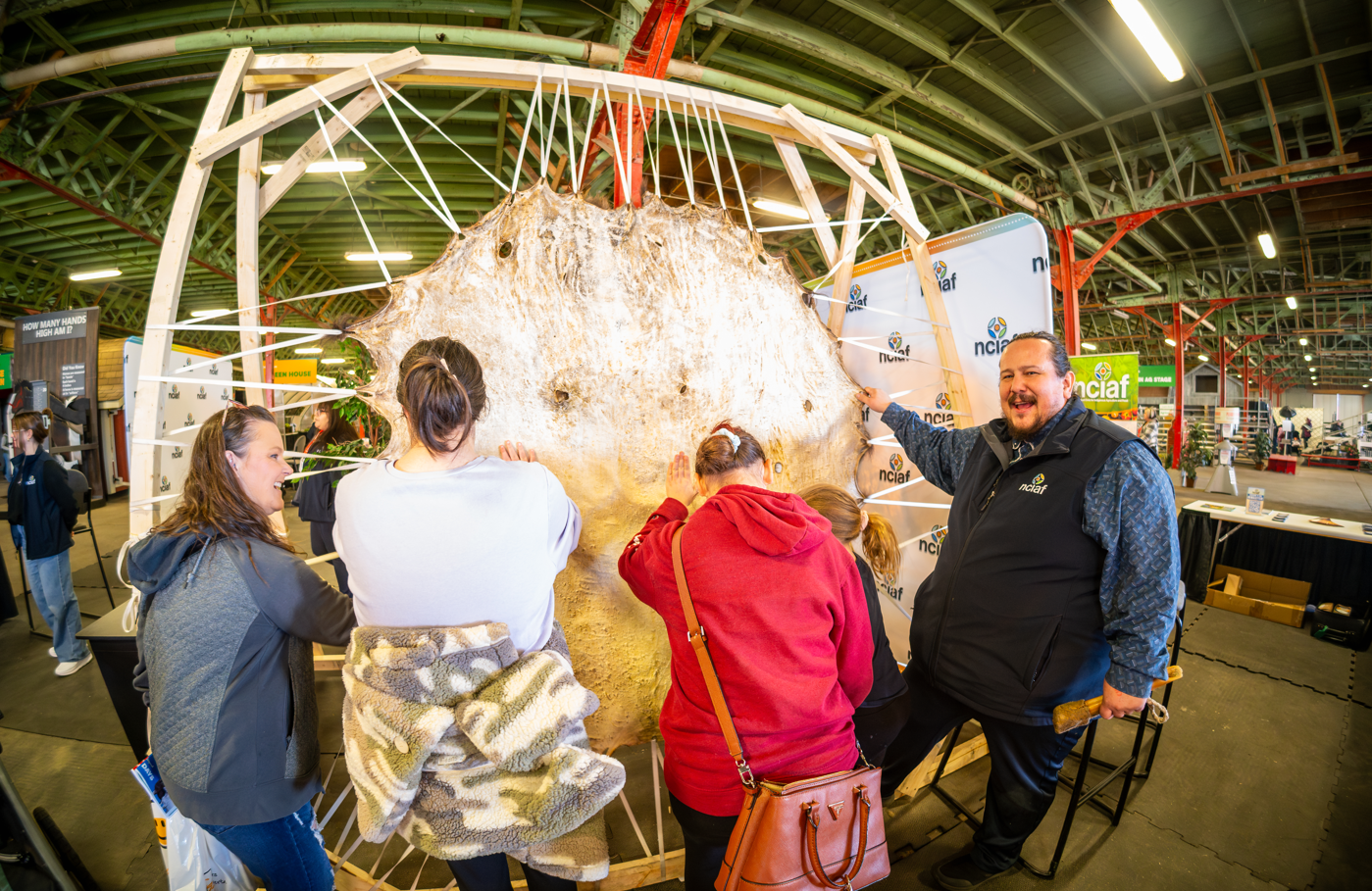
At Aggie Days, being able to see, smell and touch seeds, hides, soil and more is all part of how young people learn where their food comes from. This year, one of the many hands-on exhibits helping bring agriculture to life for students and the general public was hosted by the National Circle for Indigenous Agriculture & Food (NCIAF), which shared perspectives rooted in culture, community and connection to the land.
Their space quickly became a popular stop, where visitors explored seeds and traditional medicines, stepped inside a Blackfoot-style tipi and got hands-on with materials reflecting generations of knowledge and practices shared by Indigenous experts including local Treaty 7 volunteers, youth and knowledge keepers.
For Monique Desjarlais, from Muskowekwan First Nation in Treaty 4 and a reconciliation and Indigenous agriculture specialist with NCIAF, being part of Aggie Days was about more than education—it was about visibility.
“It’s so important for kids to be able to see Indigenous representation in this space,” she said. “The opportunity for Indigenous people that is present in the agriculture and agri-food space is growing. However, our demographic usually has to go through a lot more challenges to succeed in this space, as many people may not know that this is an area that they can explore or grow in. It’s also incredibly important for people to learn about traditional Indigenous ecological knowledge or agriculture practices in order to revitalize the knowledge, immerse youth, and acknowledge how Indigenous knowledge has influenced this sector today.”
Desjarlais said events like Aggie Days also create opportunities for all students to learn about traditional ecological knowledge and Indigenous agricultural practices.
“It’s important for people to learn about some of our traditional ecological knowledge, or some of our traditional practices, and to bring it forward because a lot of it has been lost,” she said.
Aggie Days welcomed over 10,000 students on school days and around 35,000 people over the weekend, introducing them to the many sides of agriculture through interactive exhibits and demonstrations. For Desjarlais, that made it an ideal setting to spark curiosity and broaden perspectives about what agriculture can look like.
“We want to bring people together through sharing knowledge and through educational opportunities,” said Desjarlais. “Just making youth aware that there are so many different avenues within agriculture and food that they could explore — and how that benefits the greater well-being and health of the overall population and industry.”
By creating space for young people to ask questions, make discoveries and experience agriculture in different ways, Aggie Days continues to connect the next generation with the people, traditions and ideas shaping the future of the industry.


Recent Stories

Behind the Crown & Leathers – Where Design and Tradition Tell Stampede Royalty’s Story
September 23, 2026Every fall, finalists stand together in anticipation at the Royalty Crowning events, waiting to hear if their name will be called as the next Calgary Stampede Princess, or Calgary Stampede First Nations Princess. For the successful candidates, the moment marks the beginning of a year spent representing the Calgary Stampede, sharing Western hospitality, celebrating culture and building connections throughout the community.

Eighteen Months in the Making: Inside the Stampede Youth Poster Competition
September 23, 2026When the 2027 Calgary Stampede Poster is unveiled this October, it will arrive as a finished image. What the reveal won’t show is the 18 months of training behind it — or the 30 young artists who went through the Stampede Youth Poster Competition together.

From Clinics to Competition: Young Riders Take on the 4-H Rodeo
September 23, 2026For 69 young riders and ropers from more than 25 4-H clubs across the Prairies, the Calgary Stampede's 4-H Rodeo is a chance to sharpen their skills, learn from professionals and put what they learned to the test in events most had never tried.